




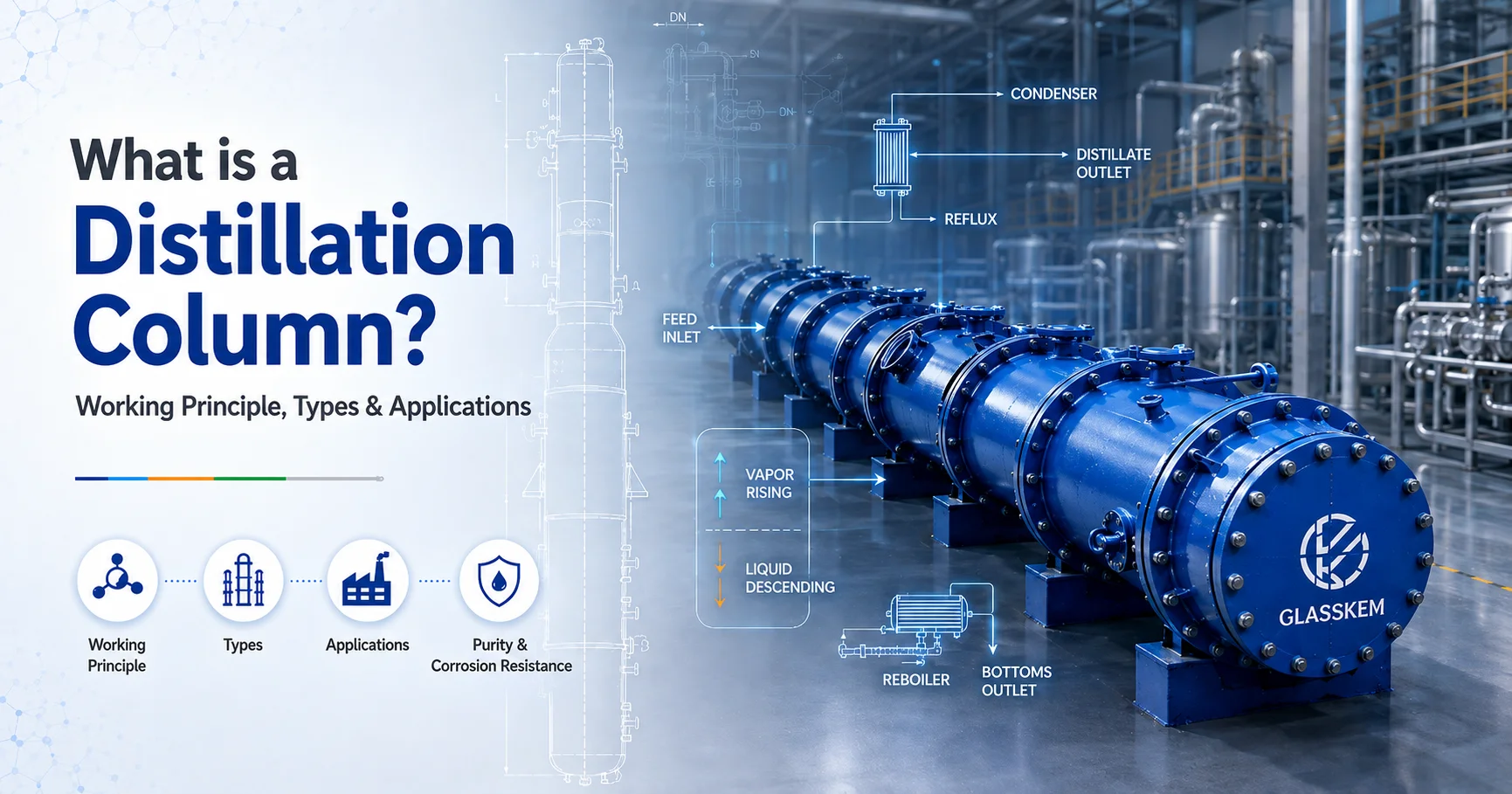
A distillation column is highly valuable in the chemical and pharmaceutical industries. It helps to separate the parts of a liquid mixture. This is done by using the fact that each part vaporizes at a rate. So it helps to get the required separation and purity. The way a distillation column is designed and operated is very important. It has to be done right to make sure the separation process is efficient and reliable.
When you are working with chemicals that can corrode equipment or require a high level of purity, the material used to build the equipment is a critical consideration. That is why glass-lined distillation columns, such as those offered by Glasskem, are often used for these kinds of applications. The glass lining protects the equipment from the chemicals and the steel body makes it strong enough to work properly.
What Is a Distillation Column?
A distillation column is a tool used to separate the parts of a liquid mixture. It does this by using the differences in boiling points and how easily the parts vaporize. As the vapor rises up the column it becomes more concentrated with the parts that vaporize easily. The heavier parts move down to the bottom with the liquid.
A typical distillation system has key parts, including:
- Feed Inlet
- Column Sections
- Packing
- Reboiler
- Condenser
- Reflux System
- Distillate Outlet
- Bottoms Outlet
How Does a Distillation Column Work?
The working principle of a distillation column is relatively straightforward. It uses heat and the repeated contact between vapor and liquid to separate the parts of a mixture. As the vapor rises up the distillation column and the liquid flows down they interact with each other many times. This allows the parts that vaporize easily to rise up while the parts that do not vaporize easily stay at the bottom. The distillation column is a useful tool for separating mixtures and it is used in many different industries, including the chemical and pharmaceutical industries, where distillation columns are really important.
Feed Introduction
The process mixture, known as the feed, enters the column at a suitable point. The location of the feed depends on its composition and the separation required.
Vapor Generation
At the bottom of the column, the reboiler supplies heat to the liquid. A part of the liquid vaporizes, and the resulting vapor starts moving upward through the column.
Vapor-Liquid Contact
As the vapor rises, liquid flows downward. When the two phases come into contact through trays or packing, the more volatile components tend to move into the vapor, while the less volatile components remain mainly in the liquid.
This repeated contact is what gradually improves the separation.
Condensation and Reflux
At the top of the column the vapor gets to the condenser. It turns back into liquid. The column uses some of this liquid. Sends it back down, as reflux. The rest of the liquid is what we call the distillate. We collect it. The distillate is the result of this process. It is what comes out of the column. The vapor turns into liquid. Then some of it becomes the distillate.
Bottom Product
The liquid that gathers at the bottom becomes more concentrated with the parts that do not easily turn into gas. Some of this liquid is sent back, to the reboiler. The rest is taken out as the final product called the bottoms.
Distillation Column Diagram
A distillation column diagram generally shows the major parts involved in the process, including the feed inlet, trays or packing, rising vapor, descending liquid, condenser, reflux line, distillate outlet, reboiler, and bottoms outlet.
Looking at these components together gives a clearer understanding of how material moves through the column and how the separation takes place.
Types of Distillation Column
Distillation columns can be classified based on how they operate and how their internal components are arranged.
Batch Distillation Columns
A batch column processes a fixed quantity of feed at a time. This type can be useful for smaller production quantities or processes where the feed composition changes from one batch to another.
Continuous Distillation Columns
A continuous column operates with a steady feed entering the system while separated products are continuously removed. These columns are generally suited to larger production requirements and processes that need continuous operation.
Tray and Packed Columns
Columns can also be differentiated by their internal construction. Tray columns use a series of horizontal trays to create stages of vapor-liquid contact. Packed columns, on the other hand, use packing material to provide a large surface area for continuous contact between the two phases.
Types of Trays in Distillation Column
Different tray designs can be selected depending on the operating conditions and separation requirements.
Sieve Trays
Sieve trays are perforated plates through which vapor passes upward. They have a relatively simple design and can provide effective vapor-liquid contact under suitable operating conditions.
Valve Trays
Valve trays use movable valves over the openings in the tray. These valves respond to changes in vapor flow, giving the column greater operating flexibility.
Bubble Cap Trays
Bubble cap trays use capped risers to direct vapor into the liquid layer. They can work effectively at lower vapor flow rates, although their construction is more complex than sieve or valve trays.
Column Design Considerations
Distillation column design needs to be based on the actual process requirements rather than simply the size of the equipment. Factors such as feed composition, required product purity, flow rates, operating temperature and pressure, number of separation stages, reflux requirements, and the choice of trays or packing all need to be considered.
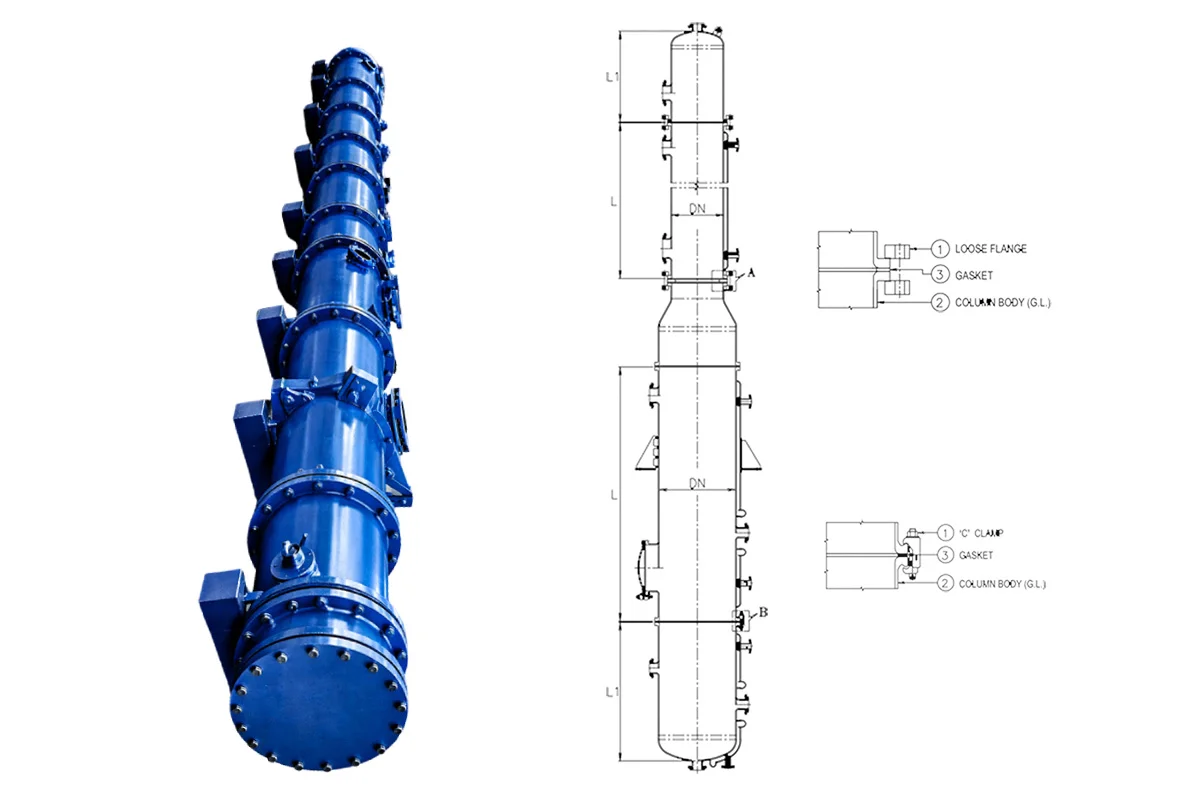
For corrosive processes, material compatibility is particularly important. With experience in glass-lined process equipment, Glasskem's glass-lined columns can be supplied with components such as supporting rings, perforated plates, inlet pipes, and flow distributors, depending on the process requirements. The columns are available up to DN600 (24") with section lengths of up to 4 meters.
Applications
Distillation columns are used in a lot of industries where we need to separate, purify or recover things such as :
- Chemical Processing: Used for separating and purifying chemicals and process intermediates.
- Pharmaceutical Processing: Suitable for processes where controlled separation, purity, and cleanability are important.
- Solvent Recovery: Helps recover valuable solvents from process mixtures instead of losing them as waste.
- Corrosive Chemical Processing: Glass-lined columns can provide a resistant process-contact surface for suitable corrosive applications.
- High-Purity Processing: Glass-lined construction can be considered where chemical resistance and product purity are important.
Glasskem Glass-Lined Distillation Columns
Glasskem manufactures glass-lined distillation columns for separation, purification, and recovery applications. The columns are available up to DN600 (24") , with section lengths of up to 4 meters.
For sections up to DN400 (16"), loose flange connections are typically used, while DN500 (20") and DN600 (24") sections use profile rings and pipe clamps. Depending on the application, the columns can include different internal components, and the sections undergo internal testing according to applicable standards and factory requirements.
Glasskem also offers different enamel qualities, including GK PharmaGlass Series, GK Sigma Blue Glass, GK DIS-STAT Glass, GK Alpha White Glass, GK ABR Plus, and GK Thermocon.
Conclusion
A distillation column is important for separating and purifying materials in process industries.
To achieve efficient and reliable separation, it is important to select the right design and construction materials based on the specific process requirements. This is especially important when handling corrosive substances or when a high level of product purity is required.
The right design and material selection can make a significant difference to the performance and reliability of the equipment.
Glasskem manufactures glass-lined distillation columns for a range of separation and purification applications. To discuss your specific process requirements, contact the Glasskem team for more information or an enquiry.