




Choosing the laboratory reactor can have a big impact on how consistent, clean and dependable a chemical process is. This is especially true when handling chemicals, sensitive materials, pharmaceutical research or small-scale synthesis.
For laboratories looking to balance process requirements with equipment, understanding the reactors construction and intended application is the first step toward making the right choice.
What Is a Glass-Lined Lab Reactor?
A Glass‑Lined Lab Reactor is designed for laboratory environments where accuracy, cleanliness and reliable performance are required. Its high‑quality glass lining creates an inert reaction surface while protecting the reactor against aggressive chemicals and solvents.
This construction makes a Glass‑Lined Lab Reactor suitable for applications involving contamination‑conscious materials. The clean inert surface also supports cleaning between batches, which is particularly useful in demanding laboratory workflows and cGMP environments.
Key Features to Consider
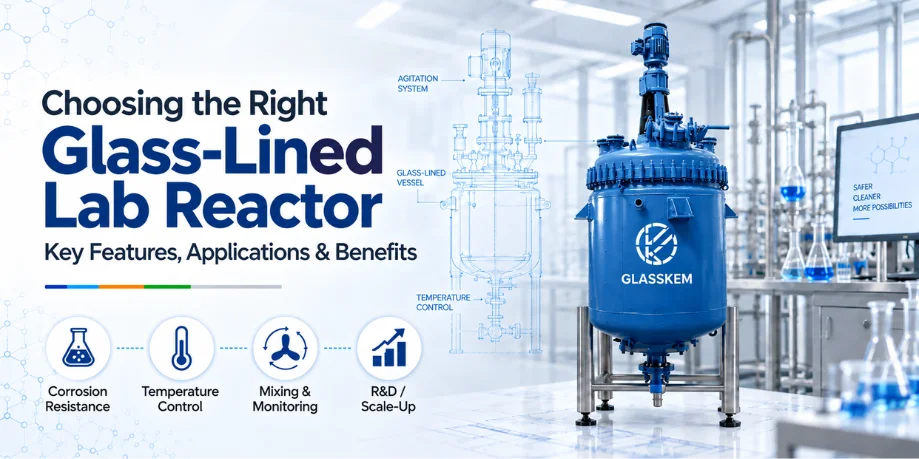
The right reactor should match the actual requirements of the process rather than simply focusing on size or appearance. Glasskem's Glass Lined Lab Reactors are available in multiple sizes and configurations and incorporate modern instrumentation for monitoring and process optimization.
Several features deserve particular attention:
- Corrosion resistance: The high-quality glass lining protects against chemicals and solvents.
- Smooth, inert surface: This surface helps keep reactions high-purity and free from contamination.
- Temperature control: The reactor is designed for heating, cooling and controlled reactions, which keeps conditions stable.
- Mixing and agitation: Accurate mixing control and compatibility, with various agitation systems support many laboratory processes.
- Process monitoring: Instrumentation supports precise monitoring of key parameters, including temperature and pressure.
- Cleaning and maintenance: The smooth construction makes cleaning easier and supports efficient turnaround between batches.
Together, these characteristics make the reactor useful where process integrity and repeatability matter.
Applications of Glass-Lined Lab Reactors
Glass-lined laboratory reactors are used across a range of laboratory and process-development activities where controlled reaction conditions and chemical resistance are required. Based on Glasskem's product applications, common uses include:
- Research & Development: Supporting laboratory experimentation, reaction studies, and process development.
- Small-Batch Production: Suitable for controlled small-scale manufacturing and batch processing.
- Scale-Up Studies: Helping evaluate and develop processes before moving toward larger production systems.
- Quality Control: Providing a controlled environment for testing and process-related laboratory activities.
- Small-Scale Synthesis: supports chemical creation where surfaces must not rust and where reaction conditions must stay steady.
- Pharmaceutical Applications: Used in drug development and lab work where the area must stay clean and chemicals must work together.
- Chemical Processing: Fits lab tasks and industrial steps that involve many chemicals and solvents.
- Academic Research: Supports experiments and studies that happen in universities and laboratories.
Benefits of Choosing the Right Glass-Lined Lab Reactor
Choosing a reactor that fits your process needs can make laboratory work more controlled, consistent and practical. Key benefits include:
- Corrosion Resistance: Glass lining protects when you work with chemicals and solvents.
- Chemical Compatibility: The inert glass surface is good for cases where you want to keep the reactor surface free from reactions.
- Controlled Processing: Heating, cooling, mixing, and monitoring capabilities help maintain the required reaction conditions.
- Product Protection: The smooth, inert surface helps reduce the risk of contamination during sensitive laboratory processes.
- Easy Cleaning: The smooth glass-lined surface supports easier cleaning between batches and laboratory operations.
- Process Consistency: By keeping the operating conditions under control we can make laboratory processes and results repeatable.
- Versatile Applications: Glass‑lined reactors can support research and development small‑batch production, scale‑up studies, quality control and synthesis projects.
- Reliable Laboratory Operations: When we choose a reactor carefully the reactor gives us a well‑controlled platform, for demanding pharmaceutical and chemical work.
How to Choose the Right Glass-Lined Lab Reactor?
Before selecting a reactor, evaluate the complete process rather than considering capacity alone. Review:
- The chemicals and materials involved
- Required reactor capacity
- Operating temperature and pressure requirements
- Heating and cooling needs
- Mixing and agitation requirements
- Required instrumentation and monitoring
- Reactor configuration
- Whether the application involves research and development batch processing, scale-up or small-scale synthesis
This method helps make sure the chosen reactor is right, for the lab needs and the planned process.
Conclusion
Choosing the Glass Lined Lab Reactor begins with a clear understanding of the process, the chemicals involved and the level of control that the application demands. Many factors can affect the suitability of a Glass Lined Lab Reactor for laboratory work. These factors include corrosion resistance, temperature control, mixing efficiency, reactor configuration and how easy it is to clean.
The right Glass Lined Lab Reactor offers a platform for research, development, small‑batch processing and, for pharmaceutical or chemical applications.
Working with a Glass Lined Reactor Manufacturer can make the selection process easier. It ensures that the Glass Lined Lab Reactor configuration matches what the application needs.
The Glasskem team can help you evaluate your laboratory reactor requirements and identify a suitable solution based on your process needs. Explore the range of Glass Lined Lab Reactors or contact Glasskem to discuss your requirements with the team.