




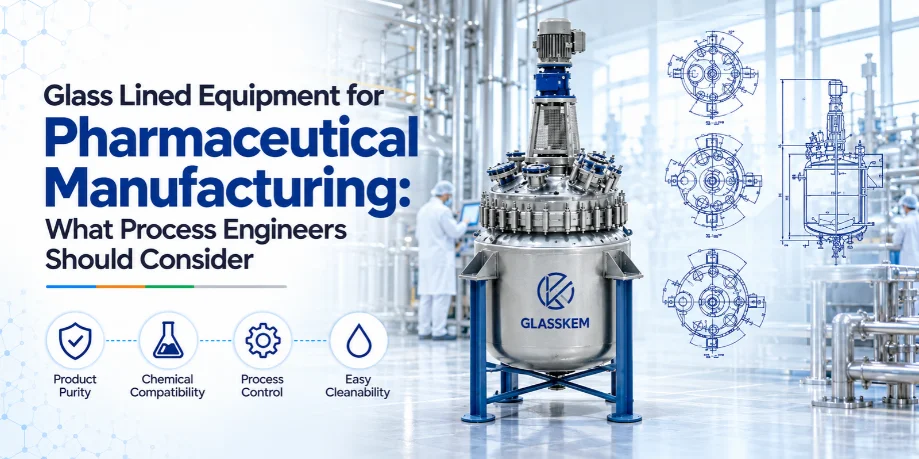
Pharmaceutical manufacturing demands a lot from process equipment. Reactors and other vessels must handle controlled processing while staying chemically compatible, ensuring product purity and operating reliably. For process engineers, equipment selection therefore involves more than capacity alone.
Glass lined equipment for pharmaceutical industry applications can be particularly relevant where corrosion resistance, cleanability, and controlled processing are important. Glasskem supplies glass lined. Related equipment for pharmaceutical and other high-purity applications. Glasskem delivers these items to pharmaceutical labs that need clean solutions.
Why Equipment Selection Matters in Pharmaceutical Manufacturing
A process engineer must think about how the equipment will work with the process, over its life. The type of chemistry involves the operating conditions, the needed production capacity, mixing requirements, whether heating or cooling is needed and how cleaning will be done—all of these factors can affect which equipment is chosen. Each one plays a role in making sure the equipment fits the process properly.
The reactor configuration also matters. Different processes may require different agitation arrangements, vessel designs, or materials of construction. Choosing equipment that fits the process can stop the mistake of using a reactor specification as if it were a one size fits all solution.
What Makes Glass Lined Equipment Relevant to Pharmaceutical Processes?
Glass lining offers a surface that resists chemicals and safely handles process materials. At the same time, the metal structure underneath provides strength and durability. This pairing of features is why glass lined reactors are commonly used in chemical and pharmaceutical manufacturing. Glasskem describes its reactors as combining steel strength with the chemical resistance of glass.
For pharmaceutical applications, the choice of glass system can also be relevant. Glasskem's GK Phi Pharma Glass is specifically described as a glass formulation designed for pharmaceutical applications, with a smooth surface intended to support easier cleaning and good resistance to acids and alkalis.
This makes pharma reactors and other glass lined pharmaceutical process equipment worth considering where product purity and chemical resistance are important process requirements.
Key Features Process Engineers Should Evaluate
Glasskem offers different glass lined reactor configurations, including AE and CE types, as well as mild-steel and stainless-steel constructions. Available designs can include different agitation arrangements, thermowell configurations, baffles, jackets, and discharge arrangements depending on the reactor type.
For pharmaceutical applications, process engineers should pay particular attention to:
- Glass lining: The selected glass system should be appropriate for the process chemistry.
- Reactor construction: Stainless-steel glass lined reactors are available for applications where carbon steel is not suitable, including pharmaceutical and high-purity applications.
- Mixing arrangement: Agitator and shaft configurations can be selected according to process and mixing requirements.
- Temperature management: Jacketed configurations and suitable reactor arrangements can support controlled process conditions.
- Configuration: AE and CE designs provide different construction and equipment arrangements.
- Customization: Glasskem states that reactor configurations can be customized according to plant and process requirements.
Considerations for Pharmaceutical Process Equipment
Before selecting equipment, engineers should assess the complete process rather than focusing on one specification. Key considerations include:
- Process chemistry and chemical compatibility
- Required reactor capacity
- Operating temperature and pressure
- Mixing and agitation requirements
- Heating and cooling requirements
- Batch requirements
- Equipment configuration
- Cleaning and maintenance requirements
The selected equipment should then be reviewed against the specific documentation, quality, and manufacturing requirements applicable to the pharmaceutical process.
Understanding cGMP Process Equipment Requirements
The term cGMP process equipment should be considered in the context of the specific pharmaceutical manufacturing process and its applicable requirements. Process engineers may need to evaluate documentation, materials, cleaning procedures, validation requirements, and other quality considerations before approving equipment.
Glasskem's SS CE Type glass lined reactor page states that these reactors are developed, installed, and commissioned following ISPE Guidelines, cGMP standards, and Good Engineering Practices.
However, engineers should still verify the exact documentation and requirements applicable to their own process before equipment selection.
Applications of Glass Lined Reactors in Pharmaceutical Processing
Glass lined reactors can support a range of pharmaceutical and chemical processing activities where controlled reactions, mixing, temperature management, and suitable process-contact materials are required. For process engineers, their relevance extends across several stages of pharmaceutical development and production.
- Pharmaceutical Manufacturing: Glass lined reactors can be used as part of pharmaceutical production processes where chemical resistance and controlled processing are important.
- API and Intermediate Processing: Reactor systems can support controlled chemical reactions involved in the processing and development of pharmaceutical intermediates and active ingredients, subject to the specific process requirements.
- Process Development and R&D: Glass lined reactors are useful for developing and evaluating chemical processes before they are implemented at a larger production scale.
- Batch Processing: Their reactor configuration and mixing capabilities make them suitable for controlled batch operations where process conditions need to be maintained consistently.
- Specialty Pharmaceutical Chemicals: Glass lined equipment can be considered for processes involving specialty chemicals used within pharmaceutical manufacturing, particularly where material compatibility needs careful evaluation.
- Heating, Cooling, and Reaction Processes: Depending on the reactor configuration, glass lined systems can support processes requiring controlled mixing together with heating or cooling.
- High-Purity Processing: Glass lined surfaces can be relevant in applications where the process requires a suitable, chemically resistant contact surface and attention to product purity.
Choosing the Right Manufacturer
The manufacturer plays a significant role in ensuring that equipment matches the intended process. Engineering expertise, manufacturing capabilities, reactor configuration, glass-lining selection, customization, and technical understanding should all be considered.
Glasskem has more than three decades of glasslining expertise and supplies glass lined reactors and other equipment for pharmaceutical, chemical, specialty-chemical, and related industries.
Conclusion
Choosing glass-lined equipment for pharmaceutical manufacturing requires a clear understanding of the process, the chemistry involved, and the operating conditions. Engineers also need to consider cleaning requirements, equipment configuration, mixing, temperature control, and other process-specific factors. Each of these considerations plays a role in selecting equipment that is appropriate for the intended application.
For process engineers evaluating glass lined equipment for pharmaceutical industry applications, Glasskem's range of glass lined reactors and equipment provides different configurations and glass systems to consider. Explore Glasskem to learn more about its solutions and discuss your specific pharmaceutical process-equipment requirements with the team.