




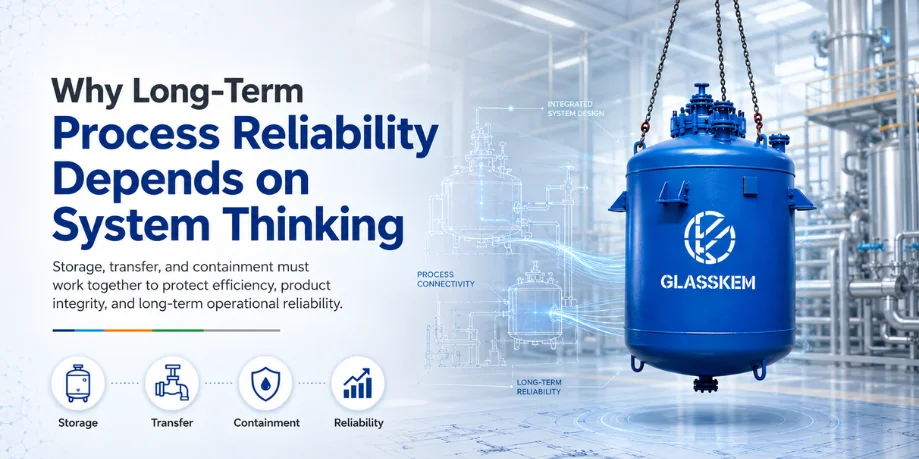
A single, high-performance holding tank only matters if the rest of the line can actually keep up with it.
On the plant floor, equipment never operates in a vacuum. A facility can install the most chemically compatible vessel available, but if that unit creates a physical bottleneck or complicates a downstream transfer, the entire operation suffers.
Long-term process reliability does not come from optimizing individual pieces of hardware. It emerges when storage, transfer, and containment systems function together as an interconnected process.
The Problem with Isolated Optimization
When a plant needs more capacity, the immediate instinct is to look for a larger tank. But optimizing one piece of hardware in isolation almost always creates friction somewhere else.
A larger holding vessel might solve a capacity issue on paper, but it immediately changes the reality of the floor. Dropping a new tank into an existing line alters:
- Transfer timing: Changing how long downstream equipment waits.
- Staging requirements: Forcing intermediate holding phases to adapt.
- Floor space: Eating up valuable clearance required for safe operation.
- Piping infrastructure: Forcing operators to rethink how material routes through the facility.
If Chemical Storage Tanks are evaluated without considering the downstream equipment, storage decisions end up dictating transfer realities. Everything affects everything.
Protection is a Continuous Chain
This interconnected thinking is critical when handling aggressive media. Purity is not a localized requirement that begins and ends inside a single reactor. When a batch leaves a primary processing unit, that exact level of protection must carry over unbroken into the next phase.
Relying on specialized Corrosion-Resistant Storage Vessels ensures the physical barrier remains intact during these transitions.
In Glass-Lined Storage Tanks for Corrosive Chemicals and High-Purity Products, the objective is not simply to buy a secure tank. The goal is to maintain a non-reactive environment across every step of the journey.
If chemical protection drops during an intermediate transfer, the integrity of the entire batch is compromised. Protection is only as strong as the weakest handoff.
Layout Decisions Ripple Through the Process
Layout is where the interconnected nature of process equipment becomes impossible to ignore. Choosing a specific tank footprint fundamentally changes how operators navigate the floor, how transfers occur, and how future expansion can happen.
Depending on the physical restrictions of the building, facilities must evaluate how a configuration impacts the broader workflow:
- When vertical clearance allows: A Glass-Lined Vertical Storage Tank maximizes volume while keeping the floor open for safe transfer pathways and secondary equipment.
- When overhead space is restricted: Facilities must shift to a Glass-Lined Horizontal Tank mounted on sturdy saddles to securely distribute the load without creating vertical bottlenecks.
That single configuration choice dictates the physical flow of the entire operation. We see this holistic approach applied frequently by facilities integrating Glass-Lined Storage Systems in Canada. It becomes even more critical for expanding operations managing Glass-Lined Storage Systems in Alberta, where optimizing the plant layout today dictates what the facility can actually achieve tomorrow.
Systemic Thinking Aligns the Entire Process
Process variables cannot be evaluated independently. A change in one part of the process immediately influences the others. Viewing Glass-Lined Receivers as part of an interconnected network helps facilities maintain tight alignment between:
- Storage capacity
- Transfer timing
- Intermediate staging requirements
By evaluating Storage Tanks & Receivers as active bridges between phases, facilities stop looking at holding periods in isolation. The hardware becomes a tool to synchronize the floor rather than just a place to park material.
The insights from Glass-Lined Storage Systems and Receivers for Process Continuity reinforce this idea. Reliable operations require staging hardware to actively support the surrounding equipment. If transfer stages, receivers, and downstream reactors are not evaluated together as a cohesive system, the facility risks forcing production around misaligned hardware.
Long-Term Reliability Comes from the Entire Process
The strongest process systems are not built around individual vessels. They are built around how those vessels work together. The interaction between tanks, the reliability of transfers, and the continuity of chemical protection ultimately dictate the success of the floor.
When a facility shifts its focus from purchasing isolated hardware to building integrated containment infrastructure, it secures the kind of long-term predictability that single-unit optimization can never achieve.
To see how these components come together to support your specific layout, visit Glasskem to explore our integrated capabilities.
If you are ready to evaluate how your infrastructure can better support your daily operations, Contact Us to discuss your exact process requirements.